



IL-6
IL-6 is a pleiotropic cytokine that regulates immune response, acute inflammation, tissue regeneration, metabolism, and stromal activation[1][2]. Mechanistically, IL-6 binds IL-6Rα and recruits gp130, activating JAK/STAT3 signaling and downstream transcriptional programs[1][3]. Disease relevance depends strongly on receptor context: membrane IL-6Rα supports classic signaling, whereas soluble IL-6Rα enables trans-signaling in gp130-expressing cells and drives pro-inflammatory activity[1][4]. Compared with these receptor forms, gp130 is broadly expressed, while IL-6R expression is restricted to selected cells such as hepatocytes and leukocytes, explaining cell-type-selective responsiveness[1]. In vascular endothelial cells, IL-6 trans-signaling induces MCP-1 through coordinated JAK/STAT3 and PI3K/AKT activation[5]. In proliferative vitreoretinopathy models, IL-6 promotes retinal pigment epithelial proliferation and epithelial-mesenchymal transition through JAK1/STAT3 signaling[6]. For experimental intervention, tocilizumab, a humanized anti-IL-6R antibody, blocks IL-6 signaling and improves rheumatoid arthritis outcomes in controlled clinical studies[7][8].
References:
- [1]. Rose-John S. IL-6 trans-signaling via the soluble IL-6 receptor: importance for the pro-inflammatory activities of IL-6. Int J Biol Sci. 2012;8(9):1237-47. doi: 10.7150/ijbs.4989. Epub 2012 Oct 24. PMID: 23136552; PMCID: PMC3491447. et al. IL-6 trans-signaling via the soluble IL-6 receptor: importance for the pro-inflammatory activities of IL-6. Int J Biol Sci. 2012;8(9):1237-47. [Content Brief]
- [2]. Danese S, et al. Interleukin-6: a therapeutic Jekyll and Hyde in gastrointestinal and hepatic diseases. Gut. 2010 Feb;59(2):149-51. [Content Brief]
- [3]. Reeh H, et al. Response to IL-6 trans- and IL-6 classic signalling is determined by the ratio of the IL-6 receptor α to gp130 expression: fusing experimental insights and dynamic modelling. Cell Commun Signal. 2019 May 17;17(1):46. [Content Brief]
- [4]. Maes M, et al. Targeting classical IL-6 signalling or IL-6 trans-signalling in depression? Expert Opin Ther Targets. 2014 May;18(5):495-512. [Content Brief]
- [5]. Zegeye MM, et al. Activation of the JAK/STAT3 and PI3K/AKT pathways are crucial for IL-6 trans-signaling-mediated pro-inflammatory response in human vascular endothelial cells. Cell Commun Signal. 2018 Sep 5;16(1):55. [Content Brief]
- [6]. Chen X, et al. Interleukin-6 promotes proliferative vitreoretinopathy by inducing epithelial-mesenchymal transition via the JAK1/STAT3 signaling pathway. Mol Vis. 2020 Jul 29;26:517-529. [Content Brief]
- [7]. Ohsugi Y, et al. The recombinant humanized anti-IL-6 receptor antibody tocilizumab, an innovative drug for the treatment of rheumatoid arthritis. Expert Opin Biol Ther. 2008 May;8(5):669-81. [Content Brief]
- [8]. Emery P, et al. IL-6 receptor inhibition with tocilizumab improves treatment outcomes in patients with rheumatoid arthritis refractory to anti-tumour necrosis factor biologicals: results from a 24-week multicentre randomised placebo-controlled trial. Ann Rheum Dis. 2008 Nov;67(11):1516-23. [Content Brief]
All Product Categories
-
IL-6 Inhibitors
(409)
View all products
-
IL-6 Agonists
(5)
View all products
-
IL-6 Antagonists
(3)
View all products
-
IL-6 Activators
(24)
View all products
-
IL-6 Modulators
(22)
View all products
-
IL-6 Chemical
(1)
View all products
-
IL-6 Inducers
(13)
View all products
-
IL-6 Degrader
(1)
View all products
-
IL-6 Ligand
(1)
View all products
-
IL-6 Proteins
(24)
View all products
-
IL-6 Related Products (506)
Related Products (506)

-
Recombinant Proteins (24)
-
MAO-A-IN-4
 0 ImagesCat. No.: HY-181110MAO-A-IN-4 is a highly selective and reversible inhibitor of monoamine oxidase A (MAO-A), with an IC50 of 0.06 μM against hMAO-A. MAO-A-IN-4 exhibits anti-inflammatory, antioxidant, neuroprotective, and antidepressant activities. MAO-A-IN-4 possesses favorable ADME properties and is suitable for research related to depression.
-
FGT-4
 0 ImagesCat. No.: HY-172934FGT-4 is a FR-β-targeted chimeric molecule. FGT-4 acts as a TLR7 agonist. FGT-4 binds to FR-β to enable delivery to tumor-associated macrophages and myeloid-derived suppressor cells. FGT-4 promotes the secretion of iNOS (associated with M1 macrophages) and the pro-inflammatory cytokine IL-6, and enhances the proliferation of cytotoxic CD8+ T cells. FGT-4 can be used for the research of breast cancer.
-
β-Bisabolol
 0 ImagesCat. No.: HY-W750980CAS No.: 15352-77-9β-Bisabolol is a potent anti-inflammatory agent that can be found in cotton gin trash. β-Bisabolol inhibits the production of nitric oxide (NO), pGE2, TNF-α, IL-6, and IL-8 in LPS (HY-D1056)-stimulated macrophages and fibroblast cells. β-Bisabolol can be used for the research on inflammatory conditions.
-
LPZ-51
 0 ImagesCat. No.: HY-183611LPZ-51 is a Vibrio β-lactam resistance sensor kinase (VbrK) inhibitor with a Ki value of 1.09 μM. LPZ-51 inhibits blaA gene expression at the transcriptional level by blocking the kinase activity of VbrK, reduces β-lactamase synthesis, and does not affect bacterial growth. LPZ-51 acts synergistically with β-lactam antibiotics. LPZ-51 decreases bacterial load, alleviates intestinal inflammation, and improves survival rate in zebrafish infection models. LPZ-51 can be used in studies related to Vibrio parahaemolyticus infection.
-
PTPRO-IN-1
 0 ImagesCat. No.: HY-183573PTPRO-IN-1 is a selective, orally active PTPRO inhibitor with an IC50 of 0.16 μM. PTPRO-IN-1 exhibits IC50 values of 2.4 μM, 2.33 μM and 2.13 μM against PTPN22, PTP1B and PTPRT, respectively, and shows almost no inhibitory activity against STEP/SSH2. PTPRO-IN-1 inhibits the TLR4/NF-κB signaling pathway in macrophages, ameliorates colonic pathological conditions and suppresses the secretion of pro-inflammatory cytokines by T cells. PTPRO-IN-1 can be used for the research of inflammatory bowel disease.
-
M802
 0 ImagesCat. No.: HY-P992401M802 is an anti-HER2/CD3 bispecific antibody, with a Kd of 0.578 nM for human HER2 and a Kd of 71.2 nM for human CD3. M802 inhibits the PI3K/AKT and MAPK signaling pathways, suppresses tumor cell proliferation, activates caspase-3, and promotes tumor cell apoptosis (apoptosis). M802 recruits and activates CD3-positive immune cells, mediates cytotoxicity against HER2-positive tumor cells, and induces immune cells to secrete IFN-γ, TNF-α, IL-2 and IL-6. M802 exhibits anti-tumor efficacy in mice with gastric cancer xenografts. M802 can be used in research related to HER2-positive breast cancer, HER2-positive gastric cancer and other cancers. The recommended isotype control is human IgG1 kappa (HY-P99001).
-
DC-PGKI
 0 ImagesCat. No.: HY-177944CAS No.: 2829198-49-2DC-PGKI is an orally active ATP-competitive PGK1 inhibitor(IC50 = 0.16 Μm, Kd = 99.08 nM). DC-PGKI stabilizes PGK1 in vitro and in vivo, and suppresses both glycolytic activity and the kinase function of PGK1. DC-PGKI-mediated inhibition of PGK1 leads to the accumulation of NRF2 (nuclear factor-erythroid factor 2-related factor 2, NFE2L2), which then translocates to the nucleus, binds to the proximal regions of IL-1β and IL-6 genes, and suppresses the LPS-induced expression of these genes. DC-PGKI can be used for the study of colitis.
-
Anti-inflammatory agent 112
 0 ImagesCat. No.: HY-181156Anti-inflammatory agent 112 is an inducible nitric oxide synthase (iNOS) inhibitor, a COX-2 inhibitor, and an anti-inflammatory agent. Anti-inflammatory agent 112 suppresses i-NOS and COX-2 protein expression, reduces nitric oxide, IL-6, and TNF-α production, and attenuates lipopolysaccharide (LPS)-induced inflammatory responses. Anti-inflammatory agent 112 can be used for the research of inflammatory disorders.
-
Asperflavin
 0 ImagesCat. No.: HY-N15651CAS No.: 1415764-41-8Asperflavin is an anti-inflammatory compound that can be produced by the marine fungus Eurotium amstelodami. Asperflavin inhibits the production of NO, PGE2, and proinflammatory cytokines, as well as the expression of inducible NOS (iNOS) in RAW 264.7 cells treated with LPS (HY-D1056). Asperflavin can be used in the study of inflammatory diseases.
-
5-LOX-IN-8
 0 ImagesCat. No.: HY-1731805-LOX-IN-8 is a 5-LOX inhibitor with anti-inflammatory activity. 5-LOX-IN-8 suppresses IL-6, IL-1β, TNF-α and IFN-γ in macrophages and reduces IL-8 secretion in SW480 cells. 5-LOX-IN-8 reduces disease activity in a DSS colitis model. 5-LOX-IN-8 can be used for research of inflammatory bowel disease (IBD).
-
Theophylline sodium acetate
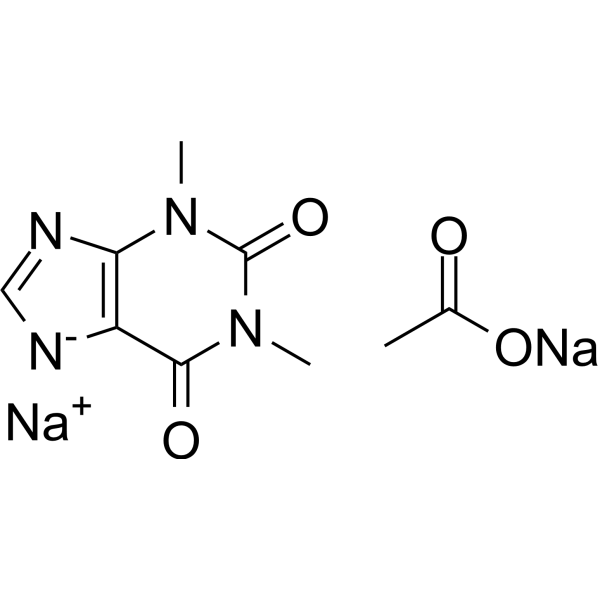 0 ImagesSynonyms: 1,3-Dimethylxanthine sodium acetate; Theo-24 sodium acetateTheophylline (1,3-Dimethylxanthine) sodium acetate is a potent phosphodiesterase (PDE) inhibitor, adenosine receptor antagonist, and histone deacetylase (HDAC) activator. Theophylline (1,3-Dimethylxanthine) sodium acetate inhibits PDE3 activity to relax airway smooth muscle. Theophylline (1,3-Dimethylxanthine) sodium acetate has anti-inflammatory activity by increase IL-10 and inhibit NF-κB into the nucleus. Theophylline (1,3-Dimethylxanthine) sodium acetate induces apoptosis. Theophylline (1,3-Dimethylxanthine) sodium acetate can be used for asthma and chronic obstructive pulmonary disease (COPD) research.
-
TRC4186
 0 ImagesCat. No.: HY-171336CAS No.: 357625-50-4TRC4186 is a potent advanced glycation end-product (AGE) breaker. TRC4186 breaks advanced glycation end-products, reduces their tissue accumulation, and decreases AGE burden. TRC4186 improves endothelial and myocardial function, preserves cardiac function, retards renal dysfunction, and reduces renal dysfunction severity. TRC4186 downregulates brain natriuretic peptide and IL-6 expression. TRC4186 can be used for the research of diabetic macro- and microvascular complications, diabetic heart failure, diabetic renal failure, hypertension, diabetes, diabetic cardiomyopathy, and diabetic nephropathy.
-
HS-276 formic
 0 ImagesCat. No.: HY-147141BHS-276 formic is an orally active, potent and highly selective TAK1 inhibitor, with a Ki of 2.5 nM. HS-276 formic shows significant inhibition of TAK1, CLK2, GCK, ULK2, MAP4K5, IRAK1, NUAK, CSNK1G2, CAMKKβ-1, and MLK1, with IC50 values of 8.25, 29, 33, 63, 125, 264, 270, 810, 1280, and 5585 nM, respectively. HS-276 formic reduces the expression of TNF, IL-6, and IL-1β. HS-276 formic can be used for rheumatoid arthritis (RA) research.
-
Anethole trithione derivative-1
 0 ImagesCat. No.: HY-189057Anethole trithione derivative-1 is a derivative of Anethole trithione (HY-B1223), and also a regulator of sulfide:quinone oxidoreductase (SQR) and uncoupling protein 2 (UCP2), with mitochondrial uncoupling-inducing activity and neuroprotective activity. Anethole trithione derivative-1 mediates mitochondrial uncoupling via SQR-dependent reverse electron transport of complex I, ROS-dependent UCP2 activation, and reduction of mitochondrial membrane potential. Anethole trithione derivative-1 reduces brain damage and improves function in mouse models of ischemic and hemorrhagic stroke. Anethole trithione derivative-1 can be used in stroke research.
-
NIK-IN-3
 0 ImagesCat. No.: HY-179701NIK-IN-3 is a potent and orally active NF-κB-inducing kinase (NIK) inhibitor with an IC50 of 5.2 nM. NIK-IN-3 suppresses non-canonical NF-κB pathway activation and inhibits the secretion of pro-inflammatory cytokines, such as TNF-α, IL-6, IL-1β and chemokine CXCL12. NIK-IN-3 shows significant anti-inflammatory effects in LPS (HY-D1056)-induced sepsis mice model and DSS (HY-116282)-induced colitis model. NIK-IN-3 can be used for the research of inflammation, such as colitis.
-
Malvidin-3-glucoside chloride (Standard)
 0 ImagesCat. No.: HY-125740RCAS No.: 7228-78-6Synonyms: Malvidin-3-O-glucoside chloride (Standard); Oenin chloride (Standard)Malvidin-3-glucoside (Malvidin-3-O-glucoside; Oenin) chloride (Standard) is the analytical standard of Malvidin-3-glucoside chloride (HY-125740). This product is intended for research and analytical applications. Malvidin-3-glucoside chloride is an orally active inhibitor of the NF-κB pathway, which blocks inflammatory responses induced by TNF-α, reduces IκB-α degradation and p65 nuclear translocation, and upregulates endothelial nitric oxide synthase eNOS to increase NO production. Malvidin-3-glucoside chloride exerts anti-inflammatory and antioxidant effects by inhibiting pro-inflammatory molecules such as MCP-1, ICAM-1, and IL-6, and regulating intestinal microorganisms and metabolites, while protecting endothelial cells and improving intestinal microecological dysbiosis under inflammatory conditions. Malvidin-3-glucoside chloride can be used to study chronic inflammatory-related diseases such as atherosclerosis and inflammatory bowel disease, and has the potential to prevent vascular inflammation and improve intestinal health.
-
Butrin
 0 ImagesButrin is a compound found in Butea monosperma flowers. Butrin reduces expression of SIRT1, AURKB, cyclin D1, pAKT, GSK-3β, β-catenin, and TGF-3β expression, enhances apoptosis and ROS production in cancer cells. Butrin downregulates Wnt and NF-κB signaling, mitigates oxidative stress, reduces proinflammatory cytokine (TNF-α, IL-6 and IL-8) production and suppresses neuroinflammation. Butrin inhibits IKK enzyme activity. Butrin can be used for the researches of colorectal cancer, Alzheimer’s disease, and rheumatoid arthritis.
-
PDE3/4-IN-4
 0 ImagesCat. No.: HY-181088CAS No.: 3088024-27-2PDE3/4-IN-4 is an orally active PDE3A and PDE4B inhibitor with IC50 values of 10 nM and 9.4 nM, respectively. PDE3/4-IN-4 shows selective activity relative to most other PDE family members. PDE3/4-IN-4 modulates the cAMP/PKA/CREB signaling pathway. PDE3/4-IN-4 inhibits pro-inflammatory factor IL-6. PDE3/4-IN-4 reduces expression of inflammatory markers in liver tissue. PDE3/4-IN-4 attenuates liver fibrosis. PDE3/4-IN-4 limits liver damage in cholestatic and sepsis-induced liver disease mice models. PDE3/4-IN-4 can be used for the research of liver injury, cholestatic liver diseases, sepsis-induced liver injury.
-
NF-κB/STAT3/iNOS-IN-1
 0 ImagesCat. No.: HY-184692NF-κB/STAT3/iNOS-IN-1 is a NF-κB/STAT3/iNOS inhibitor. NF-κB/STAT3/iNOS-IN-1 reduces the expression of inflammatory mediators TNF-α, IL-1β, IL-6, IL-8 and COX-2. NF-κB/STAT3/iNOS-IN-1 upregulates the expression of epithelial barrier-related proteins E-cadherin, Occludin and Zonula occludens-1. NF-κB/STAT3/iNOS-IN-1 alleviates disease severity and histopathological damage in mouse colitis models. NF-κB/STAT3/iNOS-IN-1 can be used for the research of inflammatory bowel disease (colitis).
-
TNF-α/IL-1β/IL-6-IN-1
 0 ImagesCat. No.: HY-181509CAS No.: 3068223-93-5TNF-α/IL-1β/IL-6-IN-1 is an anti-inflammatory agent. TNF-α/IL-1β/IL-6-IN-1 exerts anti-inflammatory effects by downregulating the expression of pro-inflammatory cytokines such as TNF-α, IL-1β and IL-6, and inhibiting the production of ROS. TNF-α/IL-1β/IL-6-IN-1 upregulates ABCG1 to promote cholesterol efflux. TNF-α/IL-1β/IL-6-IN-1 can be used in the research of inflammatory and lipid metabolic diseases such as atherosclerosis.




